
RESEARCH
Social Dimensions of Aquaculture
Explore the cultural and social dynamics affecting the aquaculture industry through research from MAIC and partners
What is social license to operate, and why is it important?
Social license to operate (SLO), a term describing the informal, ongoing support for a project granted by the community, is gaining traction in the aquaculture industry. Farmers have recognized the importance of gaining community support for the success of their own farms and the broader industry. Social license is also a community empowerment tool. Having the power to withhold or grant social license gives community members more of a say in how companies operating in shared waters act— this puts pressure on aquaculture farmers to prioritize their community’s well-being in an effort to become better neighbors. This way of thinking creates a more socially sustainable industry.
Why is public perception research important?
Relying primarily on surveys, public perception research helps us to better understand general views about aquaculture. We can also identify characteristics or values that predict certain outcomes, such as support for aquaculture, and record trends and changes over time. Public perception research can help inform aquaculture regulation decision-making, aid in creating strategic awareness campaigns, and help inform industry members about social impacts.
Social License Webinar Recording
Watch the recording of our Social License webinar, where MAIC's Emily Whitmore gives an overview of farmer strategies for outreach and engagement, how farmers go about gaining trust from their stakeholders, and how they have dealt with opposition.
Social License to Operate Research Projects
Social License for Aquaculture Roadmap
Complete

Summary: In collaboration with farmers, MAIC has created a social license guidebook for shellfish and seaweed aquaculture in Maine. This guide is based on a series of interviews in which farmers shared practical ways of earning trust and support from their communities.
Methods: Semi-structured interviews with randomly selected shellfish and seaweed farmers. Farmers were also involved in the drafting and editing of the final guidebook.
Lead Researcher: Emily Whitmore, Ph.D.
Funder: World Wildlife Fund (WWF)
Project Status
Project design
Prelim drafting
Farmer input
Final drafting
Final guidebook
Project outputs

Social License Guidebook

Executive Summary
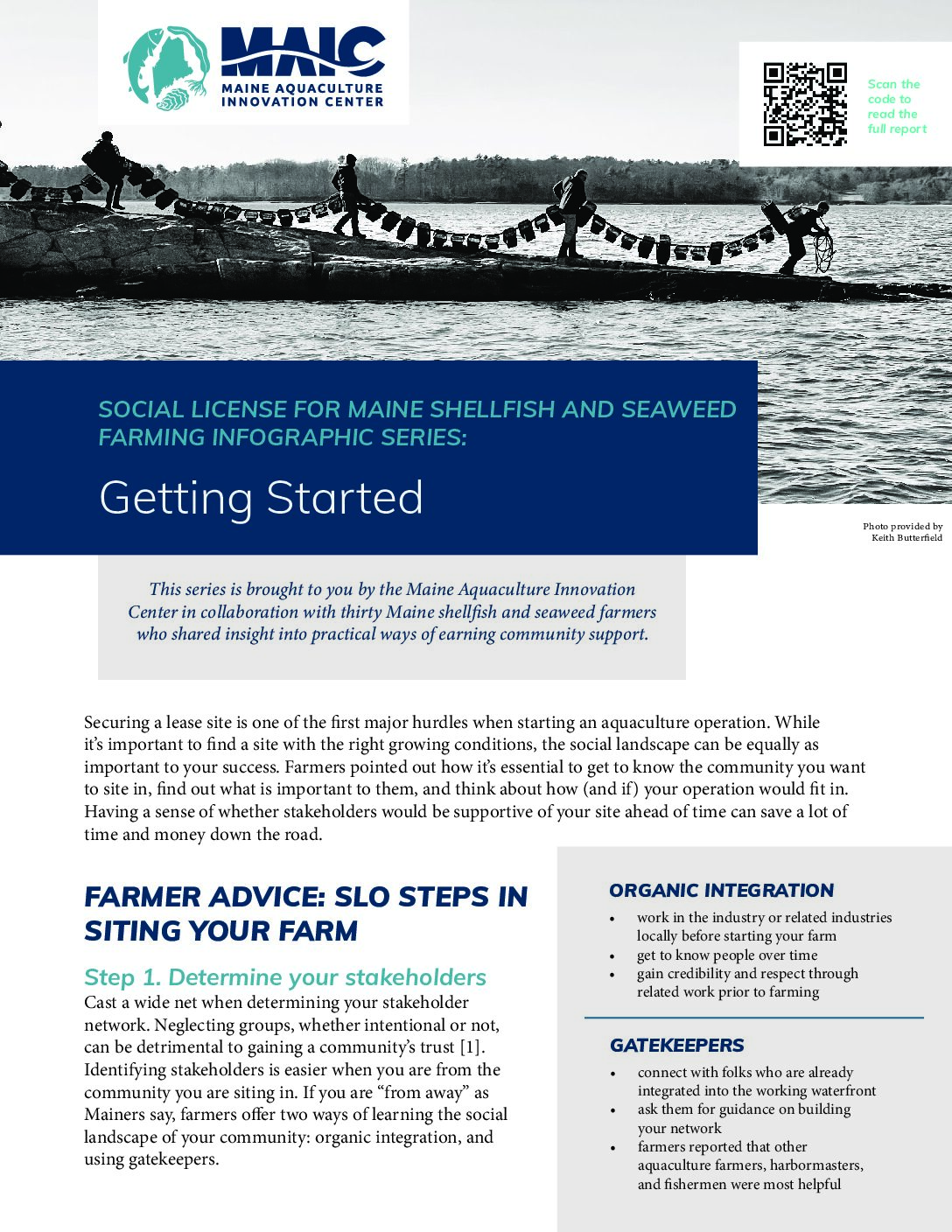
Getting Started
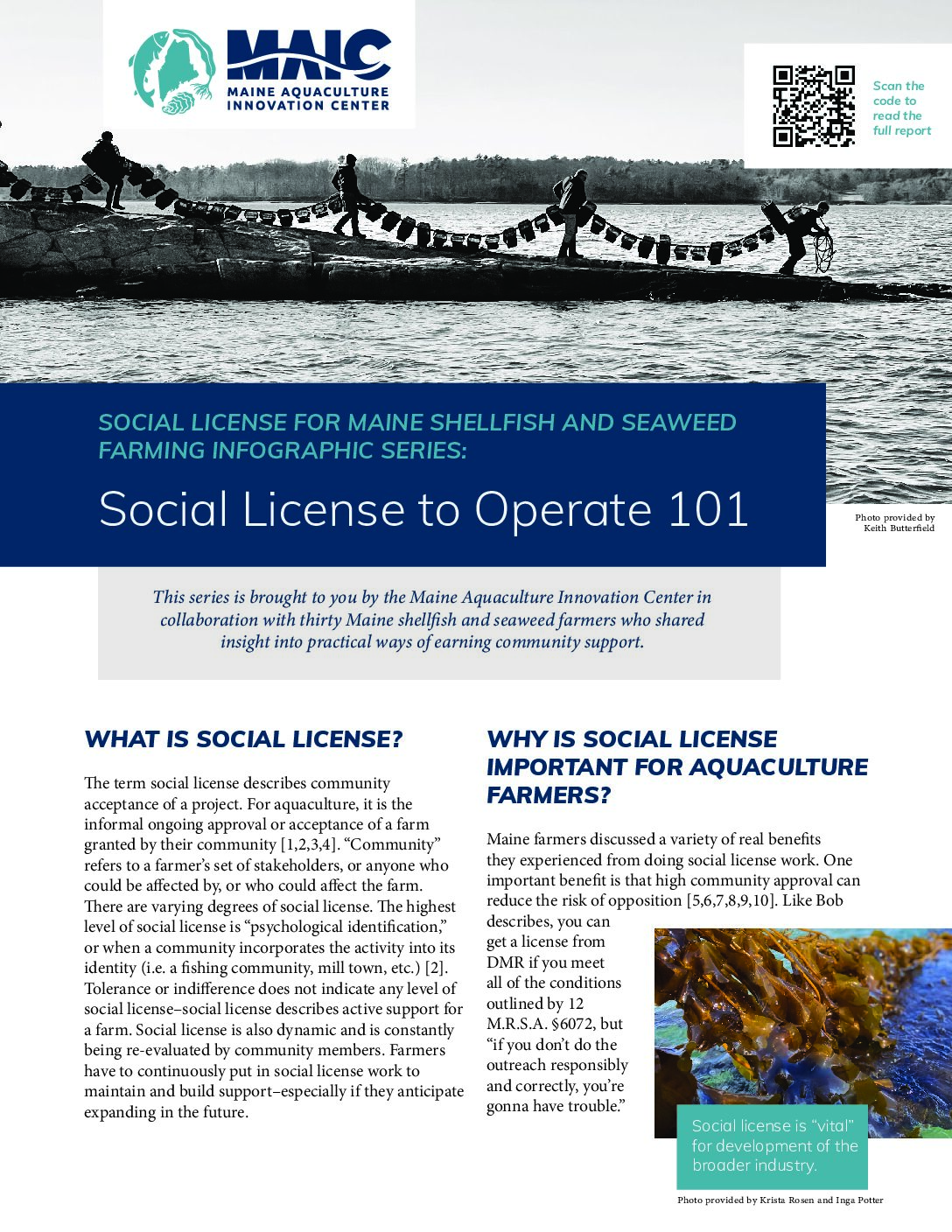
Social License 101
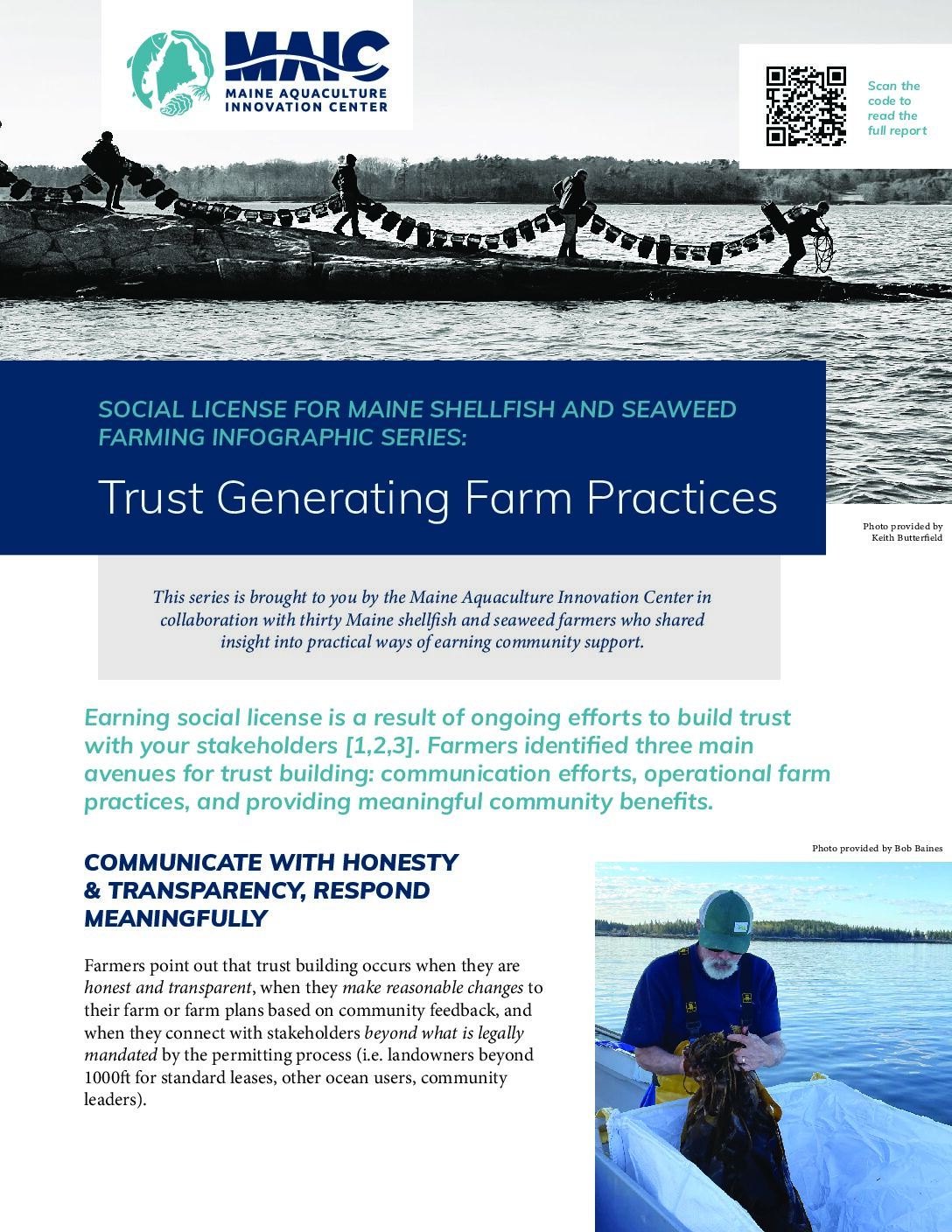
Trust Generating Farm Practices
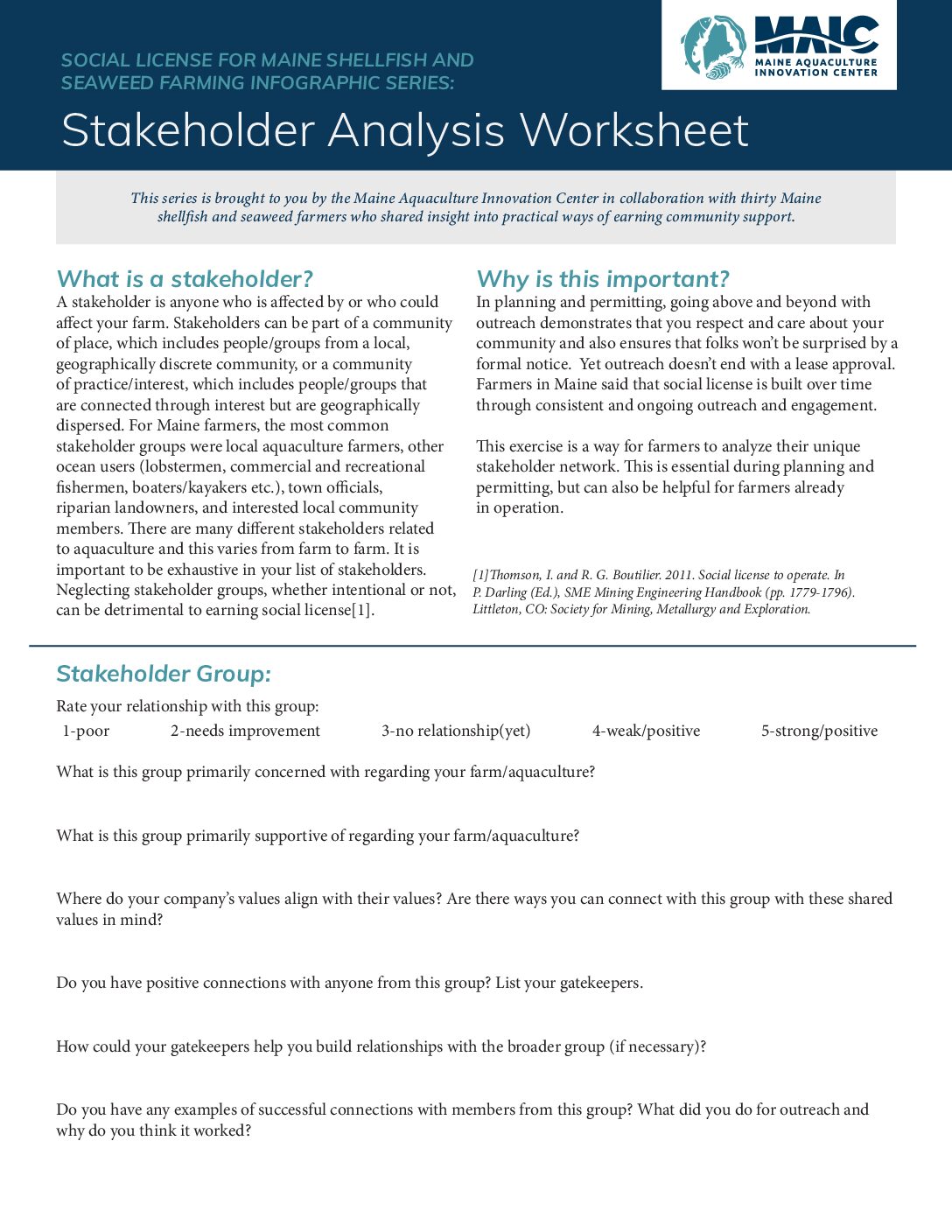
Stakeholder Analysis Worksheet
Whitmore et al. Working the ground game: How Maine shellfish and seaweed farmers are building social license to operate. Aquaculture 613, 741786.
A Guide for Shellfish & Seaweed Farmers in Maine
Complete

Summary: Develop a social license roadmap that outlines ways that supporting organizations can help advance social license for the aquaculture industry.
Methods: Knowledge exchange panel and case studies
Lead Researcher(s): Emily Whitmore, Ph.D., Sydney Avena
Funder: World Wildlife Fund (WWF)
Project Status
Project design
Prelim drafting
Farmer input
Data collection
Final drafting
Final guidebook
Project outputs
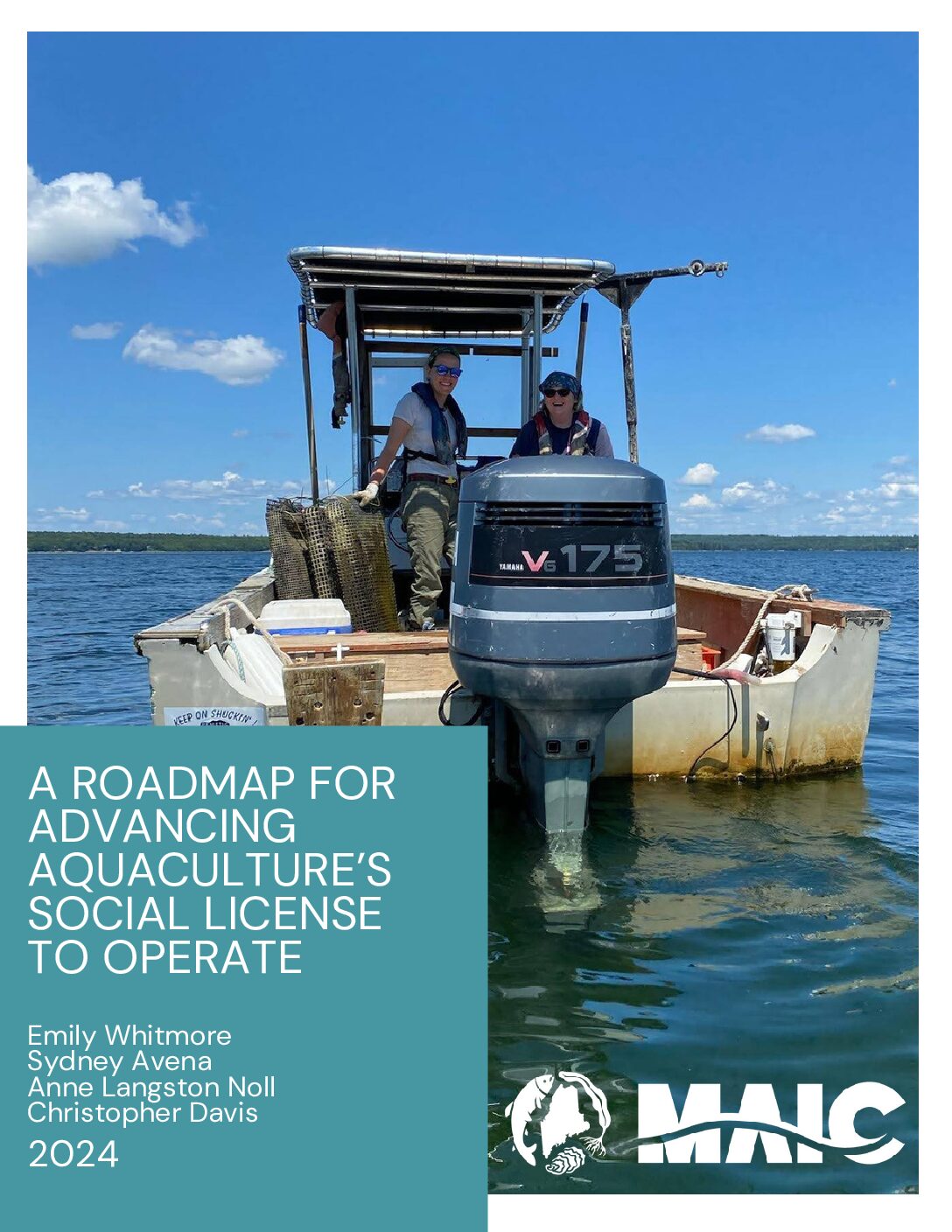
Social License Roadmap
Public Perception & Social Acceptability Research Projects
Aquaculture Perceptions Pine Tree Poll
Complete
Summary: Survey of Maine residents about finfish, shellfish and seaweed aquaculture.
Methods: Panel survey of Maine residents
Lead Researcher(s): Emily Whitmore, Ph.D.
Funder: World Wildlife Fund (WWF)
Project Status
Project design
Data collection
Analysis & drafting
Final drafting
Final report, article & infographics
Project outputs

Public Perceptions Report
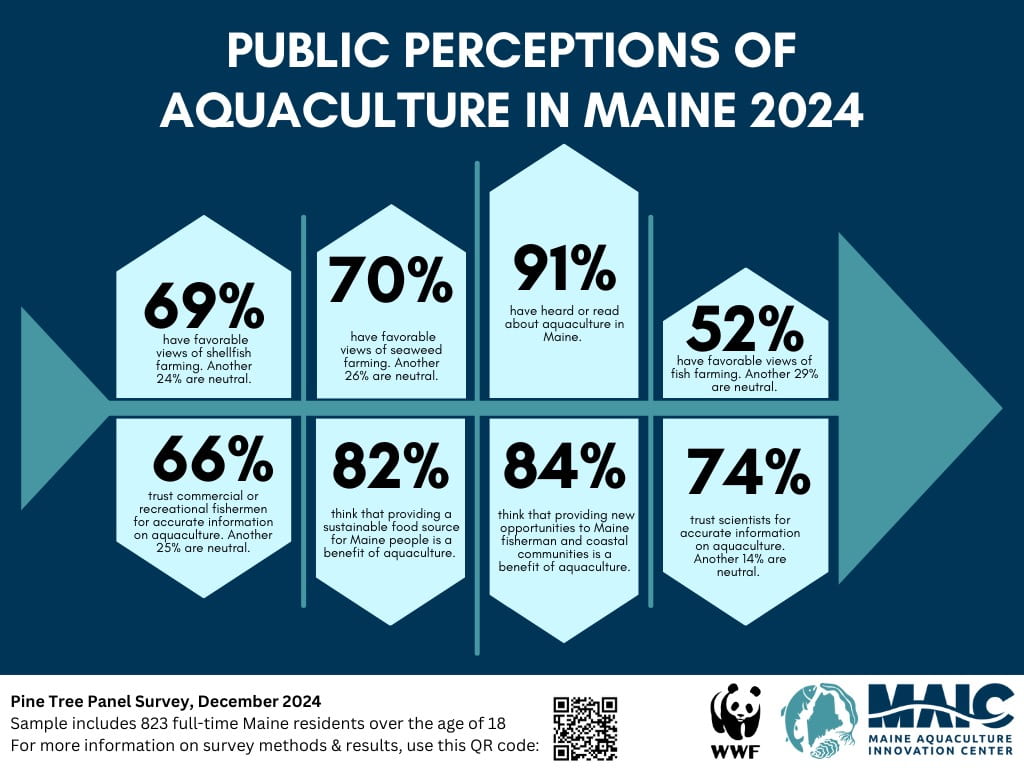

Whitmore et al. Public perceptions of aquaculture in Maine: The role of place-based values. Aquaculture, 600, 742197.