RESEARCH
Sea Scallop Hatchery Development
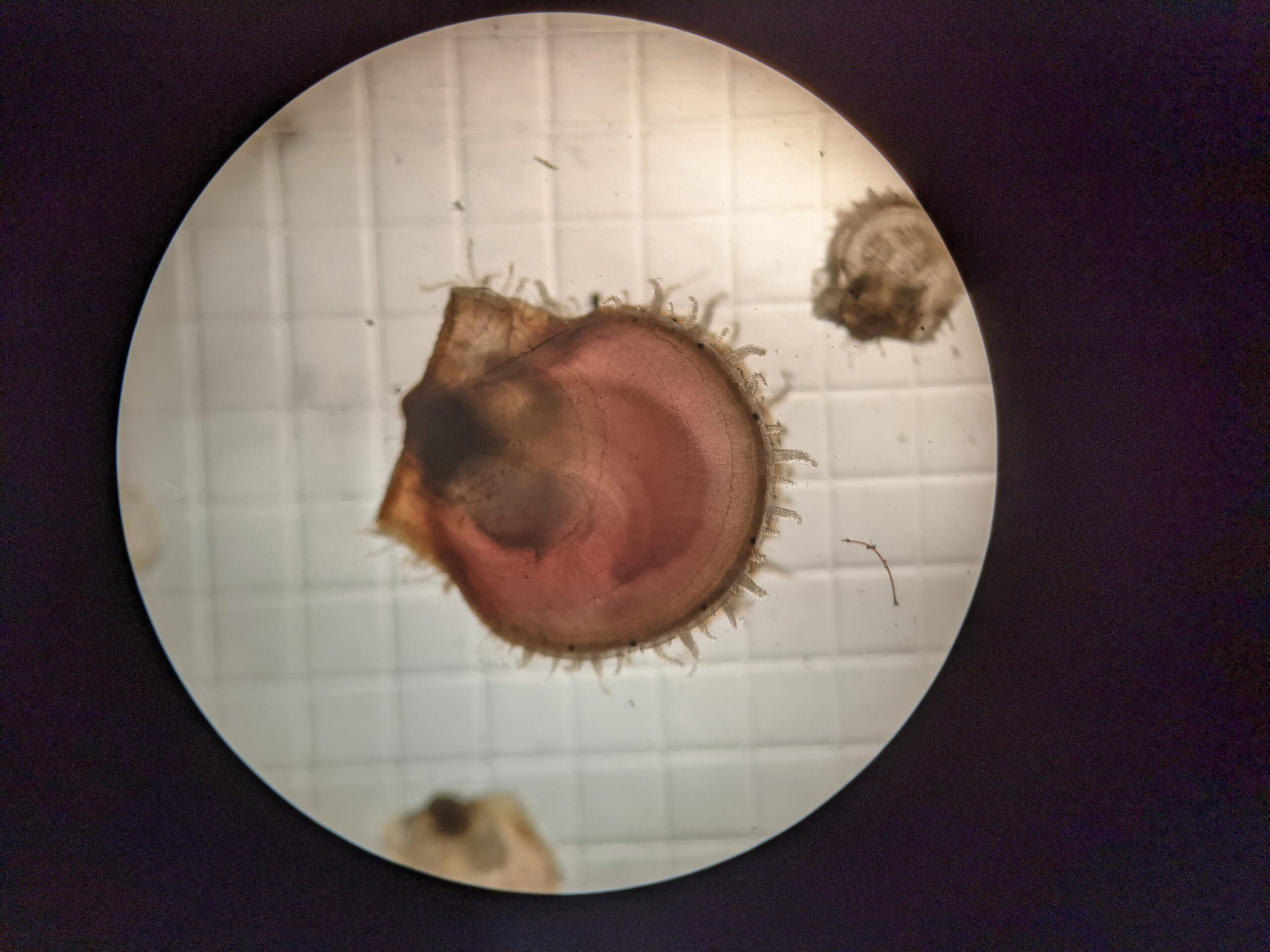
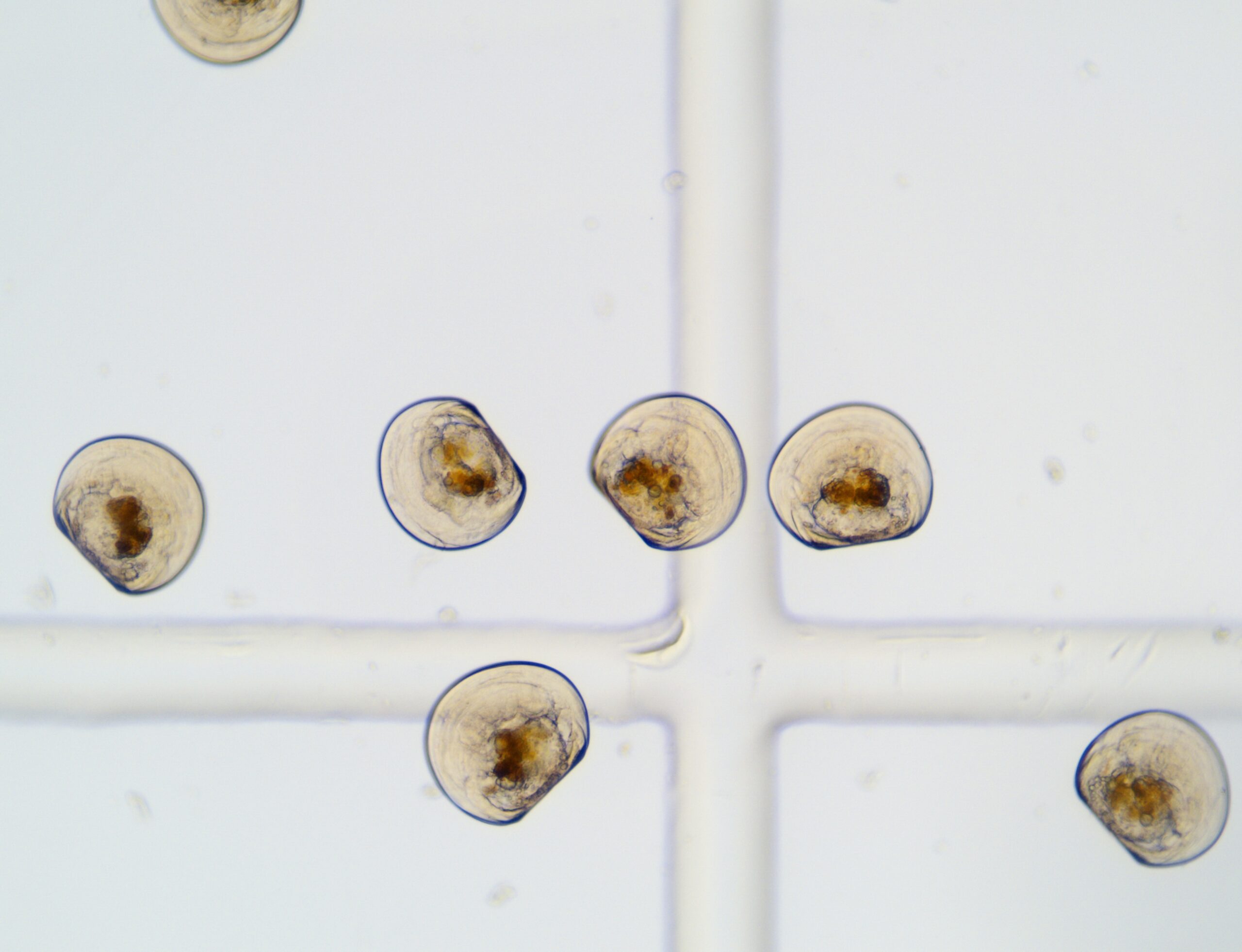
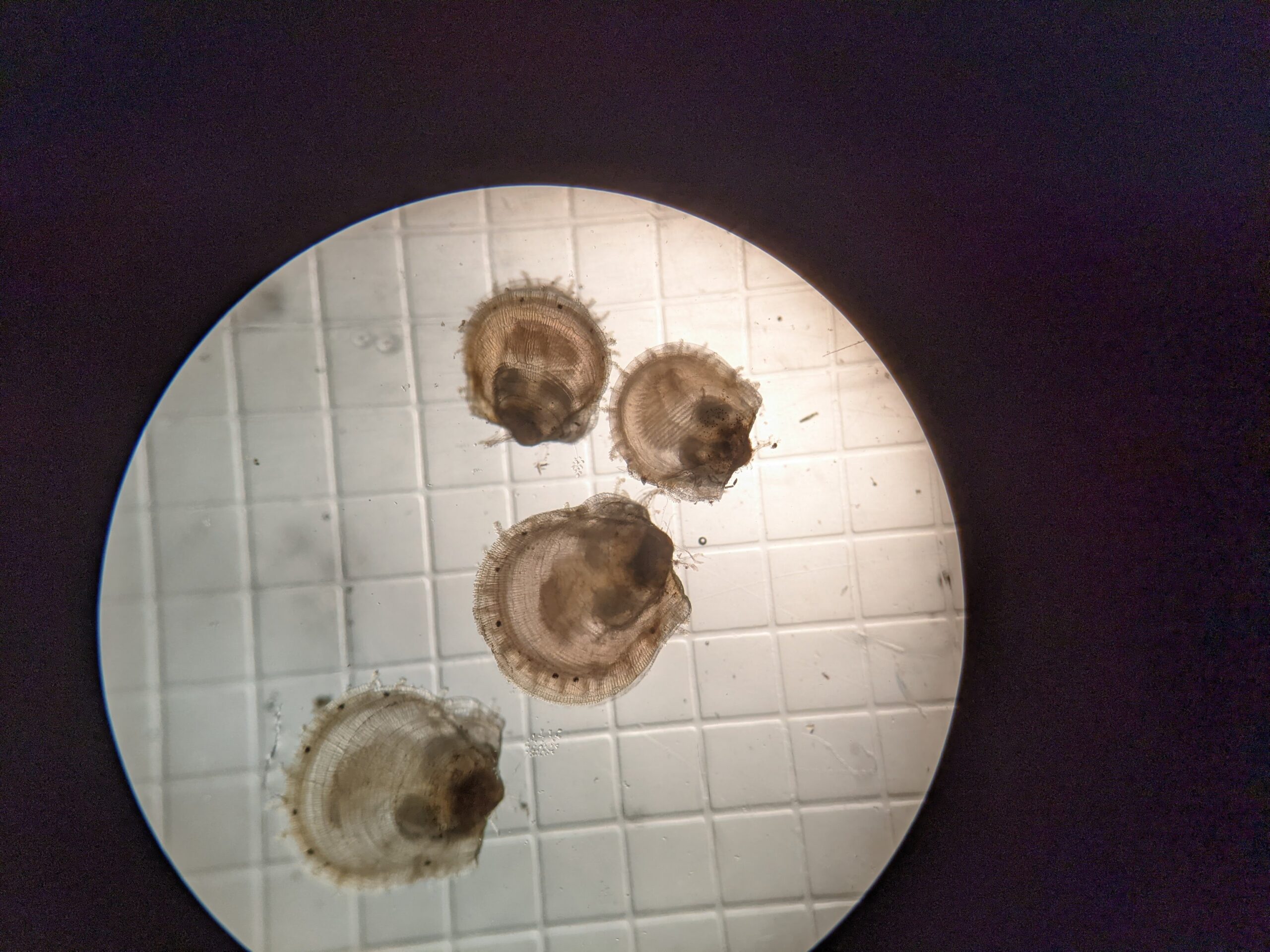
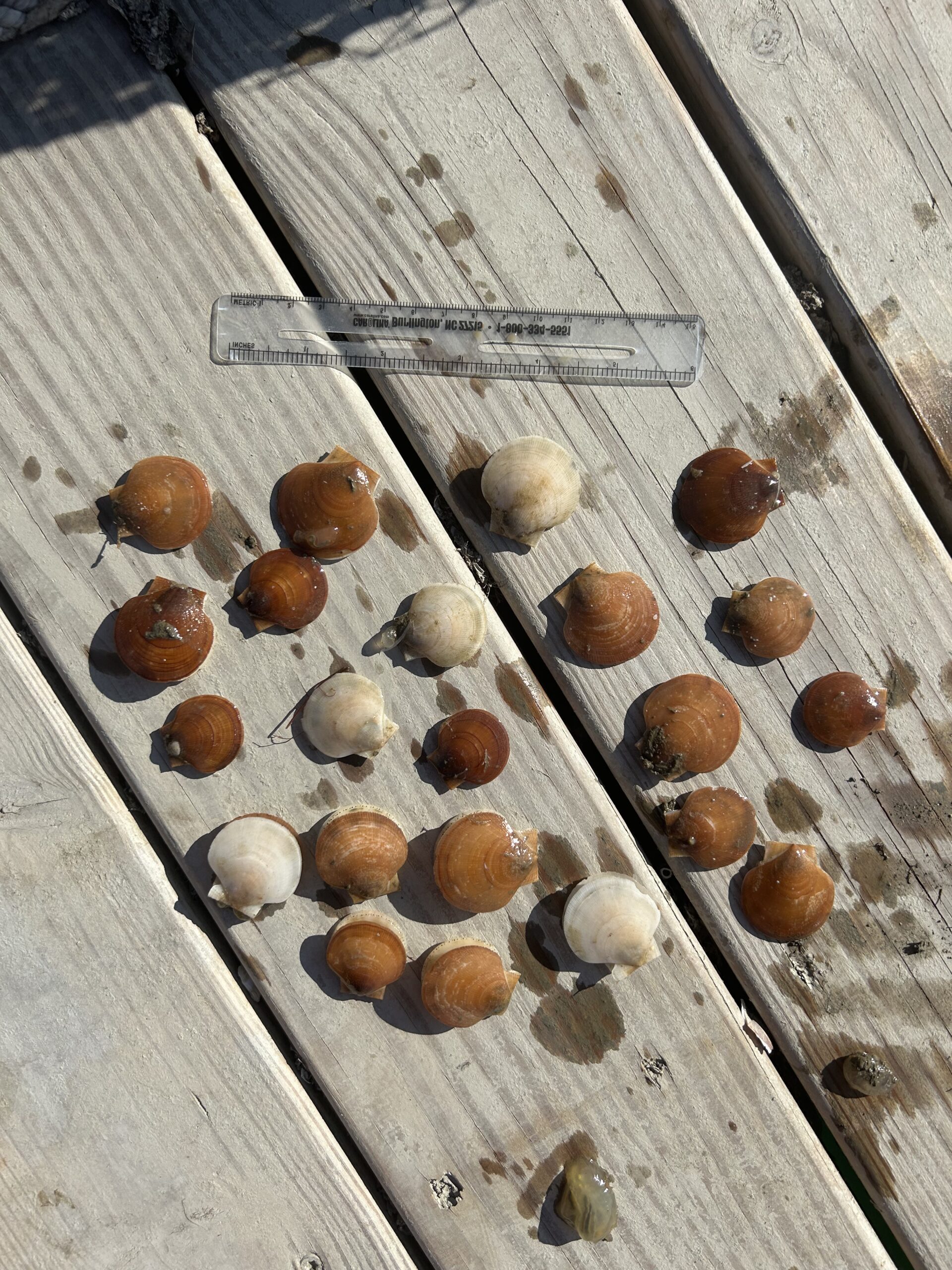
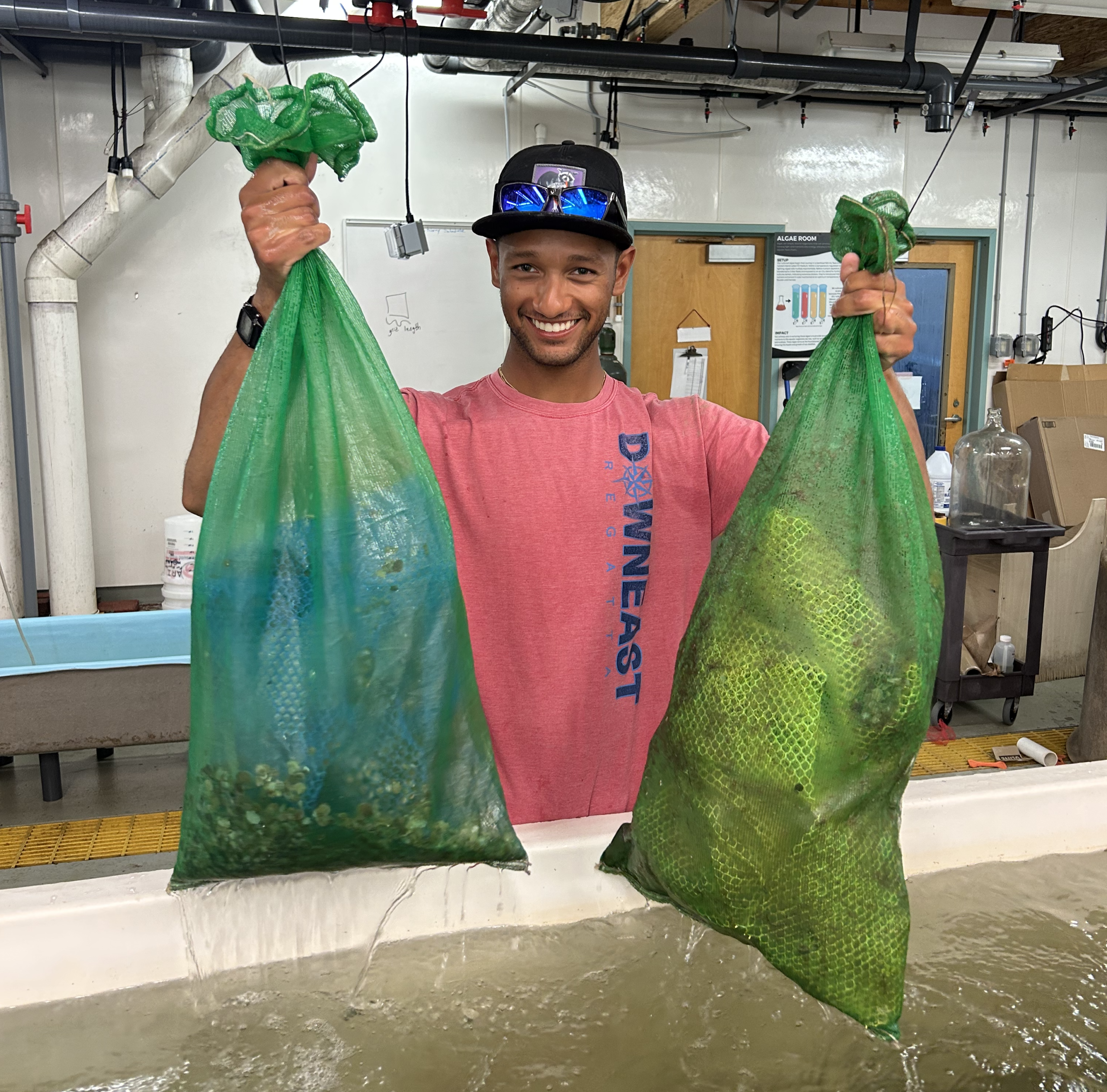
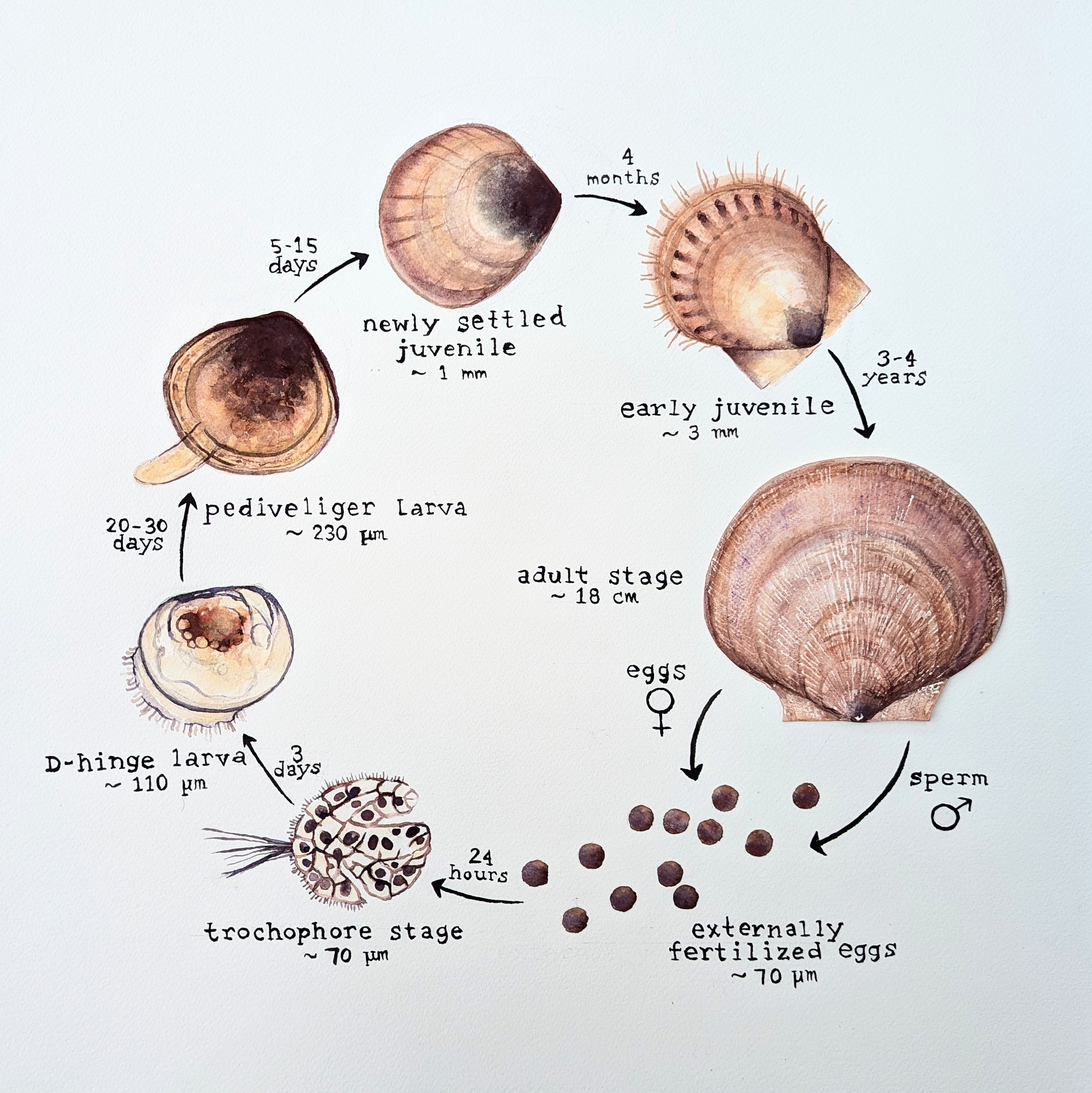
This project seeks to broaden the knowledge base of the hatchery production of Atlantic sea scallops through a cross-hatchery, multidisciplinary approach. The sea scallop’s lengthy larval phase, which can last up to 45 days, has proved to be a challenge, especially when coupled with larval sensitivity to environmental conditions and hatchery expenses. Although there have been limited research-scale successes with sea scallop hatchery production, repeatable, large-scale seed production has remained elusive and unreliable. Five years of larval experiments have been conducted at three hatcheries: Mook Sea Farm, the University of Maine’s Darling Marine Center/Aquaculture Research Institute, and the Downeast Institute, with Mook Sea Farm producing cohorts of juvenile sea scallops during the first four years. Larval growth at Mook Sea Farm increased by 88% from 2021 to 2024, reducing the time to set by 9 days (Avena et al. 2026). These results suggest that sustained hatchery efforts could produce sea scallops with a shorter larval stage, making hatchery production more economically viable. High mortality in late larval D-stage continues to be the primary barrier to successful production at the Downeast Institute and the Darling Marine Center/Aquaculture Research Institute. However, in 2025, these two hatcheries produced juvenile sea scallops for the first time following a granular assessment of animal husbandry and facilities management practices. Several settlement practices have been tested, including: spat bags stuffed with Netron, downwelling screens, and fiberglass sheets, with varying success.
Project Partners




Project Objectives
Establish reliable best practices for larval rearing protocols
Establish reliable best practices for larval settlement
Identify hatchery microbiomes and trends over time, health status, and developmental phase
Understand the ontogeny of larval immunocompetence and its relevance to larval survival
Establish reliable best practices for broodstock conditioning
Establish reliable best practices for induction of spawning
Understand the role of parentage in reproductive and larval success
Evaluate the economics for commercial scale hatchery production of sea scallop spat
Engage with stakeholders to create a community of practice throughout the project
Project Timeline
2021
Formation of the Hatchery Implementation Team (HIT)
In 2021, MAIC convened a consortium (named the hatchery implementation team, or HIT) of researchers, hatcheries, and institutions in Maine and the Northeast U.S. to bring together the best cold-water hatchery experience and sea scallop larval research.
The HIT was assembled in response to two concurrent efforts. First, the Maine Scallop Aquaculture Report (Fitzgerald et al. 2021): an in-depth examination focusing on global best practices, challenges, and opportunities, commissioned by three statewide organizations representing academia, finance, and aquaculture development. The work identified the lack of sea scallop hatchery technology as a primary barrier to meaningful growth in Maine’s scallop aquaculture industry. Secondly, MAIC and partners received funding from the Atlantic States Marine Fisheries Commission to develop a community of practice in scallop aquaculture and perform limited hatchery trials.
Additional funding allowed HIT to develop common protocols for rearing scallops, implement identical hatchery protocols throughout the summer, and observe differences and common experiences. Weekly meetings allowed HIT to share results, brainstorm, and adjust protocols.
2022
Expansion of HIT
An award from NOAA Sea Grant (NA22OAR4170160) enabled the HIT to continue its work, expanding the team to include immunologists, microbiologists, and economists.
2023
Microbiome Study Published (Ishaq et al. 2023)
Microbiome work and larval immunocompetence studies have complemented the group’s research into larval rearing protocols. Faculty and graduate students at the University of Maine have characterized the bacterial communities present in hatchery sea scallop larvae raised at the Downeast Institute compared to wild-collected veligers (Ishaq et al. 2023), finding that hatchery larvae had lower bacterial richness than the wild larvae and tank biofilms, and hatchery larvae had a similar bacterial community to both wild larvae and tank biofilms where taxa were present. Larval immunocompetence studies are ongoing, with results expected in the coming months.
2024
Bioeconomic Model Completed (Noren 2024)
A bioeconomic model for sea scallop hatcheries was completed as a part of this project in 2024. In March 2024, interviews were conducted with hatchery staff to identify and estimate components for growing sea scallop spat in a hatchery. Primary parameters included hatchery methods (static or flow-thru and the use of nursery culture), business expenses (consumables, insurance, and hourly pay), tank and culture metrics, algal culture metrics, and economic metrics (price and discount rate) (Noren 2024). For biological parameters, the model considers the developmental stages as five separate entities: (1) fertilization/egg, (2) trochophore, (3) D-stage larvae, (4) pediveliger, and (5) juvenile scallop in nursery culture, with each stage reporting duration and estimated mortality. The model outputs assess at what production scale and efficiency the purchase of sea scallop spat would become more profitable than wild collection and define a price/scallop spat in relation to grower-informed production scale (Noren 2024).
2026
Cross-Hatchery Paper Published (Avena at al. 2026)
Highlights:
- No hatchery reliable source exists for sea scallops in the US due to a long larval phase.
- The time of competency to set for sea scallop larvae has been recorded at 24 days post hatch.
- Reduction in time to competency to set could make hatchery culture more economically viable than previously assumed.
- Increase in growth rates across all hatcheries shows knowledge building by hatchery teams.
Publications
Avena et al. A cross-hatchery collaborative approach to developing hatchery techniques for the Atlantic sea scallop. Aquaculture 613, 743441.
Noren, C. 2024. A bioeconomic analysis of Atlantic sea scallop hatchery culture and integration into an uncertain grower ‘scale-efficiency’ wild spat procurement framework. Doctoral dissertation, University of Maine.
Ishaq et al. Bacterial community trends associated with sea scallop larvae in a hatchery system. Aquaculture Reports, 32, p.101693.
Check out our webinar on the scallop hatchery project below!
Research in Action
Photos from the HIT hatchery trials